Wednesday, 31 July 2024

What is a Bill of Lading? Problems and solutions

Bill of Lading 
Bill of lading is a legal document that's issued by a carrier to a shipper detailing the type, quantity, and destination of the goods being carried. A bill of lading is a document of title, a receipt for shipped goods, and a contract between a carrier and a shipper.
Types of Bills of Lading
Some of the most common types of bills of lading include:
Inland bill of lading
Ocean bill of lading
Through bill of lading
Negotiable bill of lading
Non negotiable bill of lading
Claused bill of lading
Clean bill of lading
Uniform bill of lading


Why Is a Bill of Lading Important?
A bill of lading is a legally binding document that provides the carrier and the shipper with all the necessary details to accurately process a shipment. It can be used in litigation if the need should arise and all parties involved will make a committed effort to ensure the accuracy of the document.

A bill of lading essentially works as undisputed proof of shipment. It allows for the segregation of duties that is a vital part of a firm’s internal control structure and to prevent theft.

The problem : Eliminating paper and manual intervention
The Bill of Lading (B/L) is the most important trade document in container shipping. Currently, stakeholders along complex supply chains using original B/Ls (OBLs) must physically courier the original documents to the importer so they can present them at the time of goods collection, which is inefficient, expensive and creates opportunities for fraud. Even with an electronic Telex release for OBLs or paperless Seaway Bills (SWBs), the lack of standard data formats and processes creates confusion that contributes to shipping discrepancies, operational delays, financial losses, and higher costs.  

The solution
The DCSA Digital Trade initiative was designed to facilitate universal acceptance and adoption of a standards-based electronic Bill of Lading, applicable to both original Bill of Ladings and Seaway Bills. Using open source Application Programming Interfaces (APIs), DCSA B/L standard enables straight-through processing of B/L data, eliminating paper and manual intervention from B/L processes. Standardised digitalisation of B/L data and processes will help create a more secure, agile and sustainable supply chain ecosystem. DCSA is also working closely with eBL solution providers on technical and legal interoperability to enable seamless digital transfer of original B/Ls across different platforms and stakeholders, which will facilitate the global uptake of B/L standards.  

The benefits
Optimise your supply chain with DCSA's Bill of Lading standard, enable frictionless sharing of digitised shipping data and improve efficiency of your shipment documentation and operations.

Increased efficiency
Reduce the time required for the documentation process, enabling more efficient cargo handling and customs clearance.

Reduced costs
Reduce expenses related to printing, handling, storage, and transportation of physical documents. 

Increased accuracy
Enhance the overall accuracy of shipping and logistics processes by minimising errors associated with manual data entry, illegible handwriting and lost documents.  


Fraud prevention
Enhance the security of shipping documents with digital signatures, encryption technologies and authentication mechanisms to ensure that the information in the B/L is tamper-proof.

Streamlined compliance
Adherence to B/L standards can contribute to improved compliance with regulatory requirements. 

Greater supply chain resilience

Gains to the Global Trade
In a recent study, McKinsey estimates that if the electronic bill of lading gains 100% adoption across the industry, it could unlock around $18bn in gains for the trade ecosystem through faster document handling and reduced human error (among other improvements) plus $30-40 billion in global trade growth, as digitalisation reduces trade friction.

Thursday, 18 July 2024

FREE TRADE AND WAREHOUSING ZONE IN INDIA : A MINI GUIDE


Free Trade and Warehousing Zone 


Get to know all about the Free Trade and Warehousing Zone in India with our mini-guide.

The Free Trade and Warehousing Zone in India or FTWZ is an economic policy of the Indian Government. They offer strategic management and logistics platforms for the import-export of goods and services. It aims to encourage ease of doing business, generating investment and trade FTWZs enjoy special economic zone status and are considered foreign territory with regards to compliance and currency. FTWZs are deemed the quintessential global trading hubs that streamline the logistics infrastructure and drive international trade.

FTWZ : International Game Changers
FTWZs are regulated by the Special Economic Zones Act (2005) and Rules (2006) as well as the Ministry of Commerce and Industries. They enable warehousing, trading and all other activities related to these. FTWZs facilitate the partial or phased clearance of imported cargo into Domestic Tariff Areas or DTAs. Similarly, goods moving from DTAs to FTWZs are considered exports and enjoy all accruing benefits. Usually, FTWZs is located within easy access and proximity to transportation hubs, while some have their own rail operations service.

In India, FTWZs are highly competitive, offering state-of-art warehousing and trading facilities. This includes expedited customs clearance, cutting-edge technology and infrastructure, inland container depots and yards, commercial complexes, etc. Companies wishing to operate via FTWZs can do so in one of two ways:

As a Trading Unit: for the purpose of carrying out authorized operations such as trading, warehousing, labelling, consolidation, etc.
As a Service Unit: availing the services of an authorized Trading Unit.
Companies that are registered as Trading Units must be an Indian entity with a nature of the business that includes import-export, trading, shipping, etc. Authorized operations are listed in the Letter of Approval (LOA) which is granted by the Unit Approval Committee. LOAs are valid for five years with the option to extend for another five years.

Several specific activities are allowed to be conducted in FTWZs. These include:
Trading which is inclusive or exclusive of labelling.
Packaging and repacking.
Re-export, resale, re-invoicing of goods.
Warehouse storage of goods for domestic or international clients.
Value add or optimizing activities on goods.
Assembly of complete or semi-knockdown of goods.
FTWZs offer unparallel advantages to international trade. Aside from the reduction in formalities for customs and excise, other incentives include income tax and demurrage costs exemptions. Efficiencies are also increased for logistics, supply chain management and operations, adding to faster turnaround times.

Currently, India has eight FTWZs which can be found at the following locations:

Taluka Panvel, District Raigad, Maharashtra.
Sriperumbudur Taluk, Kancheepuram District, Tamil Nadu.
Moujpur, Bulandshahar, Uttar Pradesh.
Taluka & District Nagpur, Maharashtra.
Chillamaturu Mandal, Ananthapur District, Andhra Pradesh.
Padur, Karnataka.
Thoppumpady Rameswaram Village, Cochin, Kerala.
Ponneri Taluk, Thiruvalur District, Tamil Nadu.

Contact us today to learn more about the Free Trade and Warehousing Zone in India and how you can use it for your business. 

Tuesday, 9 July 2024

Classification of Goods and Compliance Requirements in India International Trade

The Harmonized System (HS) is an international nomenclature of goods classification developed by the World Customs Organization in 1988. It has been adopted by more than 190 countries. The HS consists of 6-digit codes for all traded goods, which are used to satisfy customs requirements worldwide. In most cases, in order to import or export a product, it must be assigned an HS code that corresponds with the Harmonized Tariff Schedule of the country of import. Most countries have added additional digits to classify goods more specifically. A code with six digits is a universal standard (HS Code) and a code with 7-10 digits (HTS Code) is often unique after the 6th digit and determined by individual countries of import. These codes are important because they not only determine the tariff/duty rate of the traded product, but they also keep a record of international trade statistics that are used in most countries.

The Indian Trade Classification (Harmonized System) (ITC) (HS)[1] code has 8 digits (the first 6 digits are common as per WCO with an additional 2 digits for added specificity). There are two schedules to the ITC HS: Schedule 1 – Import tariff, and Schedule 2 – Export tariff.   Both tariffs are a key instrument for establishing the customs duty rate applicable to imported goods per the First Schedule. The Second Schedule incorporates items that are subject to export duties and the rates of duties thereon in the Indian Customs Tariff Act of 1975. Import permissibility in terms of Foreign Trade Policy, duties that can be levied on the goods, benefits like applicability of various duty exemption notifications, identification of applicable incentives for export goods, and determining a product’s eligibility under a trade agreement are also based on HS code classification. The classification of goods for import and export purposes has always been a challenge for corporations due to the very nature of the classification process and its interpretation between customs and corporations.

Classification is most critical when new products are introduced into a company’s trade environment because it requires in-depth understanding of the product description and use as well as knowledge of the classification system process. This is supported by a study that Thomson Reuters and KPMG conducted this year. It revealed that ambiguity in product descriptions and different classifications are the biggest challenges to performing product classification globally. Governments scrutinize HS codes and product descriptions to detect fraudulent activities.

The Comptroller and Auditor General of India, an independent Supreme Audit Institution, mentioned in its report no.12 of 2014 that the Directorate of Revenue Intelligence of India had detected 298 duty evasion cases involving mis-declaration of goods to the tune of Rs.2392.26 Crore (USD 378 Million) in the financial year 2013.

A wrong or misleading product classification brings a lot of risk to a company and can substantially erode its profitability due to increased penalties and recovery. For example, chain and sprockets used in motorcycles could either be classified under ITC (HS) Code 73151100 as roller chain in the subheading of chain and parts thereof, or under ITC (HS) Code 84839000 in the subheading of toothed vehicles and chain sprockets. The former has a preferential duty rate of 0% under the Indo-ASEAN FTA and the latter has a preferential rate of 5%. However, as for automobiles, based on the end use, these classifications mentioned above are not applicable. The product should be classified under 87141090 under the subheading of parts and accessories of vehicles, which are not eligible for preferential rates under the India-ASEAN Free Trade Agreement. Such incorrect classification could lead to a finding of non-compliance, resulting in penalties and delays in shipment clearance.

If a company is found to have misclassified commodities for import and export, the local customs authority may flag the company as needing extra scrutiny. This will lengthen the product’s review process and delay the import and export process. If misclassification is found to be a continuing problem, the government may cancel the company’s Accredited Client Programme (ACP) status and in extreme cases may cancel its Importer Exporter Code (IEC). The person responsible for classification ultimately does not want to be the source of this type of action.

Challenges faced by Exporters and Importers for classifying products:

Lack of available resources (e.g. technical information, classification data, literature, etc.)
Not having dedicated a person/expert within the organization
Inadequate description on invoice and supporting information
The risks for misclassification of goods (summaries below):

Disqualification from Risk Management System (RMS) Clearance
Over/underpaid customs duty
Under-claimed duty drawback and other export incentives
Eligibility for export, import and licensing requirements
Missed Other Government Agencies (OGA) requirements
Disqualification from Risk Management System (RMS) Clearance: Exceptional growth and complexities in international trade and increasing burdensome global security requirements have put customs in a more challenging environment than ever before. The Risk Management System wing of Indian customs plays a very important role in the Import/Export clearance process to detect fraud and drive compliance. Product classification in a Bill of Entry/Shipping Bill is one of the key parameters among many for the risk management system to alert officials for additional inspection. Inspection of Import/Export consignment could result in additional cost, time and potential delay to the clearance for the Importer/Exporter.

Over/underpaid customs duty: Customs calculates duties based on the HS code of the product declared by the importer in the Bill of Entry (BOE).  An incorrect HS code could result in higher or lower duty based on the tariff rate. The product code selected might also have a higher rate of total customs duty because of Anti-dumping (ADD) or safeguard duty or both, depending upon the origin of the goods. If the importer realizes the HS code declared in the BOE is incorrect, an amendment to the BOE is required. That can be expensive and time-consuming.

Under-claimed duty drawback and other export incentives: Availability of duty drawback (DBK) is linked to HS codes, although one DBK code could be applicable to a similar set of HS codes. For example, menthol falls under 2 ITC (HS) codes. Code 29061100 represents menthol, which has DBK under the All Industry Rate (AIR) schedule of 1.4%, and Code 30039021 represents menthol crystals which have a 1.9% DBK. However, both codes have the same export benefit rate of 3.0% in the recently announced Merchandise Exports from India Scheme (MEIS).  If the exporter is exporting menthol crystals using the code 29061100, which has a 0.5% lower DBK (AIR) available, and if the shipment has a value of USD 150,000 FOB, the exporter could lose about USD 750 on this shipment. This is a very large amount when the exporter has a high value of shipments/turnover. If a company is exporting USD 150 million in value per year it can lose up to USD 750,000 annually.

Eligibility for export, import and licensing requirements: The Directorate General of Foreign Trade (DGFT) issues a Foreign Trade Policy every five years with a focus on the country’s interest. The policy prohibits some goods from export and import transactions, linked to their product classification or HS code. Importers/exporters should be well-informed before agreeing to any contract for export or import of such goods and comply with licensing requirements as prescribed in the policy.

Missed Other Government Agencies (OGA) requirements: OGAs play an important role in international trade controls. The HS code listed in the BOE and shipping bill is one of the criteria on which the customs officer marks the documents for additional requirements, such as a No Objection Certificate (NOC)[2]. NOC is required for pharmaceutical and cosmetic products. It is issued by the Assistant Drug Controller and classified under Chapter 30, which automatically qualifies a product for ADC-NOC (Additional Drug Controller). Some products may fall under Chapters 1-10, 29 and 33 and be subject to the OGA for a wildlife NOC. The exporter and importer should be aware of the NOC requirements to avoid delays in customs clearance and meet the regulatory requirements for declarations.

Summary: In today’s complex trade environment, product classification remains a major challenge for companies and regulatory authorities. As companies are continuously developing new products that serve more than one purpose/end use, product classification becomes more challenging for trade professionals and customs officers. Companies are looking at options to reduce costs by applying relevant exemptions under certain conditions, avail themselves of export benefits etc., and be compliant with the requirements. Customs agencies are continuously enhancing their systems with additional controls to avoid fraud and protect the nation’s interests. In both these conditions, having a good product classification approach plays a major role in avoiding conflicts.

Automation of product classification and other tools to keep trade professionals up-to date on regulatory changes could assist in driving compliance and cost benefits.

To learn more about import or export, visit our ONESOURCE Global Trade page

[1] ITC (HS) codes are better known as Indian Trade Clarification (ITC) and are based on Harmonized System (HS) of Coding. It was adopted in India for import-export operations. Indian custom uses an eight digit ITC (HS) code to suit the national trade requirements.  This schedule has two parts – First schedule with an eight digit nomenclature and the second schedule with description of goods chargeable to export duty. The first schedule is based on H.S code system. The Indian Tariff Code has 8 digit which has been designed in such a way without any modification of first 6 digit as per H.S code system, but followed by another two digit classified as ‘tariff item’. So ITC has been classified as first four-digit code called ‘heading’ and every six digit code called ‘subheading’ and 8-digit code called ‘Tariff Item’. This addition is done, within the permissible limit of World Customs Organization – WCO, without any changes in H.S. code system.

[2] A type of legal certificate issued by any agency, organization, and institute or in certain cases, an individual, which does not object to the covenants of the certificate.


Wednesday, 12 June 2024

Six warehousing trends for 2024

Six warehousing trends for 2024
There has been unprecedented pressure placed on global supply chains in recent years due to the global economy shifting, some prolonged consequences of the COVID-19 pandemic, as well as multiple political conflicts that have profoundly changed global markets and decreased the global race for more warehousing space.

Today, in-person shopping and e-commerce coexist seamlessly, according to the customer’s preferences, where warehousing is servicing orders day and night, to keep up with delivery promises as short as “next hour”. Despite all these challenges, as customers' demand rises, companies are currently looking for ways to build supply chains that can match the pace of their business, in a way that is automated, predictable, customised, and speedy!

Now, looking ahead as businesses explore ways to plan, here are the ways in which they can take care of their end-to-end warehousing, storage facilities, and inventory management to tackle 2024 and fulfil their customers’ wishes.

What will be the upcoming warehousing trends in 2024?
Automation: In recent years, automation has transformed the warehousing industry by revolutionising operations and redefining how goods are handled, stored, and distributed. The most used automation technologies that will still take centre stage in 2024 will include Autonomous Mobile Robots (AMRs) to manage automated fulfilment activities and enhance the efficiency of order picking. Autonomous robotic arms will be increasingly used for example to unload containers, minimising workplace injuries connected to depalletisation and support with repetitive tasks. These smart machines can empower businesses by efficiently moving products throughout the distribution centre and packing orders with precision and speed by using advanced localisation algorithms, computer or machine vision and digital interfaces with existing systems. In the rapidly evolving omnichannel landscape, speed will be paramount, and integrating multiple automation technologies in a fast way could present itself as challenging for companies. However, when executed right, warehouse automation will yield substantial long-term rewards and will be essential to address the escalating demands of e-commerce, continuing to boost the deployment and use of robotic and autonomous solutions throughout the next year (and beyond).
Stock merging: 2024 will see more businesses asking warehouses to structure themselves to allow for businesses to keep their products in one stock. While today businesses usually ask warehouses to keep the stock for physical shops separated (at times in different buildings) from the online shopping one, “the trend now seems to be to merge stocks, allowing brands to pull orders and returns from the same stockpile servicing all the different ways in which they manage their omnichannel offering” says Charlotte Petersen, Global Head of Business Product Warehousing at Maersk. This trend, giving brands flexibility, can also be helpful in the management of buffer stock (the extra amount stored just in case orders exceed predicted amounts) which in turn supports the reduction of extra production, impacting the environment.
Visibility: Has it been packed? Has it been shipped? Today, the amount of information a brand needs to provide to its end-consumer is augmented, as people get more experienced in ordering online and they also expect more transparency on their orders. 2024 will see visibility being offered as a “need to have” and not a “nice to have”. This information will be necessary for warehouses to gather and distribute to their partners, also on product returns, reducing the number of calls to customer service which can be of help to both consumers and businesses.
Sustainability: As most businesses are currently focused on creating strategies to lower the environmental impact of their facilities, they will lean more on their integrated logistics service providers to reduce Scope 3 carbon emissions from warehousing operations. This is done by improving building new warehousing infrastructure using sustainable materials and servicing it with sustainable energy sources. Next year, we will see integrated logistics service providers making increased use of emissions visibility tools to help reduce GHG emissions within supply chains. These tools are already in use by fourth-party logistics (4PL) providers to overall increase the visibility of logistics but will be directed as well to have a better view of emissions. This would be a great asset for businesses that have set ambitious decarbonisation targets which can be achieved via continuous improvement. Customers are actively embracing circular economy principles to minimise waste. Improving Circularity with the help of reusable pallets, and disposable and/or reusable packaging can drastically help reduce carbon footprint within a warehouse. So far recyclability has been pursued by LSPs at the behest of customer requests but going forward waste management will become an important criterion for customers to ;.
Data optimisation: “In the dynamic world of warehousing, digitalisation plays a crucial role as the enabler of automation and speed, for future growth” confirms Nitesh Mandal, Global Head of Growth, Strategy and Solution Design for Fulfilment at Maersk. 2024 will see more businesses adapt to digital processes and modern warehousing operating systems. The upcoming advancements will include optimisation platforms that allow for simulations of both existing and potential environments to enhance business operations. A prime example of these is the Internet of Things (IoT) devices mounted on various pieces of machinery as well as other artificial intelligence (AI) operated tools that through the use of data, will enable forklift operators to work safely, by providing real-time safety alerts (e.g.: if people are in the path or when forklifts are in no machine zones). Data-led digitalisation will also enable equipment such as Automated Guided Vehicles (AGVs), conveyor systems, and robotic pickers to speed up precision and movements. The result will be a seamless flow of goods from arrival to shipment, minimising the risk of human error, and significantly increasing the overall productivity and capacity of distribution centres. Finally, data-driven decision-making, using analytics and predictive maintenance for machinery and equipment, is expected to increase in 2024 for warehouses to reduce downtime.
Restoring and customising: Warehouses that are deemed “old” by today’s standards will be retrofitted to meet the needs of modern logistics e-commerce operations. The new year will also bring a deeper level of industry-specific customisation, based on the needs of targeted markets such as e.g., pharmaceuticals or automotive. This customisation trend will be one that will keep evolving in the years to come.


What is in sight for warehousing?
For businesses worldwide, keeping up with the rapid evolution of technologies is no easy task, and a careful analysis of each option is necessary before committing to large investments. As the economy is not picking up yet, and businesses keep a focus on costs, looking into optimisation makes sense. In order to keep up with faster fulfilment needs, 2024 will see the warehousing world speed up its innovations for quicker supply chain management, particularly focused on automation, better data management, and decarbonisation. On par, this will be done while implementing the latest safety measures and refurbishing older facilities so that brands can keep their integrated logistics flow smooth and resilient for what is to come. And such re-thinking and re-assessing can be done through strategic partnerships with integrated logistics providers that can support a fast flow – powered by innovation and digitalisation - whilst keeping in mind sustainability and safety.

Sunday, 2 June 2024

Singapore port Congestion forces MSC to opt for Indian ports for Transhipment operations


Congestion-hit Singapore force Mediterranean Shipping Company to rely on Indian ports for transhipment
Container terminals at India’s eastern and southern ports such as Visakhapatnam and Kamarajar are reaping the benefits

 Mediterranean Shipping Company (MSC), the world’s largest container carrier, has increasingly started using Indian ports such as Kamarajar and Visakhapatnam for its transhipment operations as congestion in Singapore force some containers lines to omit calls at the world’s second busiest container port.

“MSC is dropping containers in terminals at India’s eastern and southern ports for transhipment. It’s huge,” said a shipping industry executive.

For instance, the Visakha Container Terminal Pvt Ltd, run by J M Baxi Ports & Logistics Ltd, handled some 70,000 twenty-foot equivalent units (TEUs) in May for the first time.

“This is mainly due to transhipment (because it is counted twice - you discharge and load back the same container). MSC is not getting space/berths in Singapore and Colombo ports (two big transhipment hubs in the region). So, they are bringing bigger ships to Indian ports and dropping their boxes; wherever they have space in Indian ports they are putting the boxes, and they will get smaller vessels to take the containers out to final destinations,” the industry executive said.

This has helped boost volumes at the container terminal run by Adani Ports and Special Economic Zone Ltd (APSEZ) at Kamarajar port, where a unit of MSC has recently acquired a 49 percent stake. As a result, the Kamarajar container terminal is almost full.

APSEZ’s flagship port at Mundra is also gaining from the congestion in Singapore.

On May 26, Mundra docked ‘MSC Anna’, the largest container ship yet to call an Indian port. The vessel having a length of 399.98 metres (roughly the size of four football fields) can carry 19,200 TEUs. During its visit, the ship loaded and unloaded 12,500 TEUs.

Last week, the international container transhipment terminal at Vallarpadam run by Dubai’s DP World at Cochin Port, berthed the 15,934 TEU capacity ‘MSC Mara’, the largest container ship to dock at the facility.

Port congestion has returned to haunt the container markets, with Singapore becoming the latest chokepoint, shipping consultancy Linerlytica said.

“Berthing delays at the world’s second largest container port of up to 7 days with the total capacity waiting to berth rising to 4,50,000 twenty-foot equivalent units (TEUs) in recent days. The severe congestion has forced some carriers to omit their planned Singapore port calls, which will exacerbate the problem at downstream ports that will have to handle additional volumes. The delays have also resulted in vessel bunching, which is causing spillover congestion and schedule disruptions at downstream ports,” Linerlytica said.

“Indian ports would also get jammed. Already terminals are seeing high inventory levels of laden units,” said an executive with one of the world’s top container shipping companies.

The congestion at Singapore port is chiefly a fallout of ships diverting via the longer Cape of Good Hope route (instead of the shorter Suez Canal passage) to help avoid attacks by Iran-backed Houthi militants in the Red Sea since October last year.

While the volumes have started seeing a small dip since April at some of the container terminals in India, transhipment by MSC is coming to the rescue, the industry executive mentioned earlier said.

Singapore is a transhipment port (with very little local cargo) and a berthing delay of 6-7 days for a ship on the East West trade plying from US/Europe to the Far East, will have a “cascading” effect.

“Instead of keeping the vessels waiting for a week to ten days in Singapore, some lines such as MSC are preferring to drop the boxes in Indian ports which have space for bigger vessels and take the containers out on smaller ships to final destinations,” he said.

The congestion in Singapore has a significant impact on the reliability of Asia-Europe container services, he added.

The congestion will also likely exert upward pressure on rates ahead of the hikes planned by lines in June as the busy season for container shipping starts in July.

Thursday, 30 May 2024

Supply Chain's Unsung Hero: The Wooden Pallet

The impact that wooden pallets and containers have on the supply chain as an important and sustainable stakeholder, especially how it impacts up the chain of supply and demand for the industry’s customer base, is a message that cuts across the cluttered decision making process that companies are faced with when choosing their distribution packaging.

We gathered insights from experts in the supply chain particularly around their ideas, concerns, questions, and what’s remaining top of mind. While most of these professionals didn’t “see” the pallet, they did see real challenges that needed to be addressed. Areas such as:

Sustainability
Reusability and recyclability
Strength, durability and customization
As we dreamt up and debated the components of a resilient supply chain, we found that most supply chain professionals didn’t take into consideration the invisible heroes that keep supply chain intact. We are working to change this perception, and enlighten supply chain architects that the wooden pallet was designed to fulfill a real need – not just a want. And that’s largely why, for many years, it has served as the sustainable solution for supply chains across the globe.

The good news coming out of the COVID landscape is that this unfortunate situation has significantly helped to raise the profile of the wooden pallet, as almost every supply chain is being reimagined in the process. But, we still have plenty of work to do.

Facts
As an industry, it is important that we demonstrate to our partners the value wooden pallets provide as a key resource to the supply chain.

Using an industry comparison, take an auto manufacturer vs. a Wal-Mart – two very different supply chains with a vast range of products that needed to be transported. A standard 48x40 pallet is not going to get every job done. Perhaps Wal-Mart may be able to use a 48x40 more often, given the lighter CPG products they’re bringing in. But they’ll still need to customize pallets for transporting electronics and other heavier goods. In fact, only one-third of all pallets are the 48x40 size!

And an auto manufacturer may need something more durable for shipping different parts of their vehicles that weigh hundreds of pounds. Our industry serves the unique needs or retailers with shipping solutions that meet their specific requirements because the pallet helps “move the world” efficiently and sustainably. From wide and thin to overly massive, we’ve broken down the customization of pallets to an exact science based on what products are coming in and going out.

We must continue to share this message whenever possible to bring awareness, to ensure that we maintain our seat at the supply chain table at all times.

Here are some great talking points to share with your partners as opportunities arise!

Wood Pallets are ubiquitous: Not only are pallets customizable, but they’re everywhere. By setting the example in terms of sustainability, we are giving the supply chain expert an opportunity to make their operations greener, more efficient and more effective.
Wood Pallets are environmentally friendly: The NWPCA relationship with the forestry community is one of our biggest priorities, and we have even gone out of our way to adhere to the International Standards for Phytosanitary Measures (ISPM) standards that protect forests and ensures our work does not put the health of our ecosystem at risk.
Wooden Pallet industry supports sustainment of the forests: In fact, each year, nearly 2 billion trees are planted in the U.S., which is more than five trees for every man, woman and child in America. Even better, our industry is a leader in sustainable forest practices. Forest certification involves independent third-party assessment that companies are operating in accordance with the principles of sustainable forest management that value the socio-economic and environmental contributions of forests. When you look at the four certification programs used in North America, we’re talking about more than 1.6 billion acres of trees. We’re proud to be a part of the progress happening with our forests, and when suppliers choose wood, they too can be a byproduct of that progress.
Wood Pallet numbers speak for themselves: There are more than 1.8 billion pallets in service every day. Think 90/90 – 90% of all products shipped on pallets, 90% of all those pallets are made of wood. We can often get caught up by the bright, shiny objects and techy innovations that wow us and paint a picture of a robot-driven future. But for the tens of BILLIONS of products that move across the U.S. every single day, it’s one simple material that makes it happen – wood.
Wood’s Role in Today’s Supply Chain
Pallets are often overlooked as an essential piece of the supply chain, but it is more than that. They are essential to the efficiency of the supply chain and its overall sustainability. As companies from every industry seek to shift their business models to further incorporate sustainability, pallets are a potential solution, not a roadblock.

At its most basic level, the supply chain includes five steps:

Sourcing new materials
Manufacturing materials into basic parts
Assembling basic parts into finished products
Selling products to end users
Delivering products to consumers The role of the pallet is within the whole chain:
Delivering raw materials for assembly
Shipping out goods
Distribution to retailers
Warehouse storage
Direct-to-customer delivery
So, what is it about wood that makes it the “lifeblood” of the global supply chain? There are several reasons, and most of them have to do with sustainability, reusability and recyclability, and customization.
The numbers tell the wooden pallet story:
Wooden pallets are a $31 billion industry in the U.S.
93% of pallets in the U.S. are made of wood
More than 90% of all products in the U.S. move on wooden pallets
95% of wooden pallets are recycled as of 2016 (in 1998, not even two-thirds of pallets were recycled).
Furthering a Sustainable Supply Chain
The investment cost, the time it takes to train colleagues and gain knowledge, the regulations you must play within, the lack of industry buy-in … all of these are factors that outweigh going all-in on a sustainable supply chain, right? Wrong!

Despite growing stakeholder pressure, many companies still do not have a comprehensive understanding of the performance, risks and sustainability impacts of their supply chain. It’s becoming increasingly clear that a sustainable supply chain develops positive return for companies. And wooden pallets can play a key role. A recent supply chain study reveals this:

“Overall, the study demonstrates that by improving environmental, social and governance (ESG) performance throughout their supply chains, companies can enhance processes, save costs, increase labor productivity, uncover product innovation, achieve market differentiation and have a significant impact on society.” – The State of Sustainability Supply Chains: Building Responsible and Resilient Supply Chains, EY & UN Global Comact.

When making improvements on the supply chain, it is important to note that using wood is good for the environment, despite some perceptions. In fact, every cubic meter of wood used as a substitute for other building materials reduces C02 emissions to the atmosphere by an average of 1.1 ton C02 (CEI-BOIS). If this is added to the 0.9 tons of CO2 stored in wood, each cubic meter of wood saves a total of 2 tons CO2. Based on these figures, a 10% increase in the percentage of wooden houses in Europe would produce sufficient CO2 savings to account for about 25% of the reductions prescribed by the Kyoto Protocol5.*

Illustrating that “wood is good,” as an industry we must continue to share with our partners facts such as:

According to the U.S. Forest Service, there were 119 percent more hardwood trees in 2007 than in 1953, with the growth-to-removal ratio of 2.00 (tow new trees for every one removed).
Each year, 1.7 billion trees are planted in the U.S., which is an average of 4.8 million seedlings each day.
Another point in supply chain development to be aware in building a reusable and recyclable supply chain using wooden pallets is that, according to McKinsey, 90% of a company’s impact on the environment comes from supply chains. Let’s look at the value pallets bring to the chain.

The wooden pallet life cycle is significant. In fact, we should be proud as an industry that 95% of them are recovered, refurnished and recycled. They become mulch, biofuel, animal bedding and more at the end of its long service life. According to the research by Virginia Tech and the USDA Forest Service, 508 million new pallets were manufactured in 2016. In the same year, 341 million pallets were recovered, out of which only 35.39 million wooden pallets were landfilled.
Are you familiar with Walmart’s Project Gigaton? Their sustainability pledge to remove a gigaton of CO2 emissions between now and 2030 is ambitious. In fact, it’s equivalent to taking 211 million passenger cars off the road in the U.S. for an entire year.

So, how do pallets stack up with that? As an industry, we have been proactive to design a carbon calculator that estimates for every 10 wooden pallets that are recycled, just under 1 car is taken off the road. The USDA estimates that 357 million pallets are recycled every year. So, the exact number of cars that would be taken off the road is more than 34.2 million. Simply put, pallets can do what Project Gigaton is aiming to do in 13 years … in eight.

Strong, Durable and Customizable Supply Chain
In conclusion, we would be remiss to point out the high standards and tools that are set and available in this industry. One tool to gauge any organization’s carbon footprint impact based on pallet usage is found at naturespackaging.org where supply chain partner companies can assess their organizational carbon footprint on pallet usage.

Also, it is important to note that both softwood and hardwood lumber are used in wooden pallets, which have been graded for structural performance and can be customized to specific sizes to for the end-product requirements. Lumber used to construct wood pallets is graded according to quality rules by the American Lumber Standards Committee, National Hardwood Lumber Association, and the Canadian Lumber Standards Accreditation Board, where grades are codified as to their performance and appearance characteristics.

As mentioned earlier, one of the biggest needs for the supply chain is having a pallet that’s truly customizable. With so many different products and shipment specifications out there, the standard 48x40 pallet is not a one-size-fits-all solution for the entire industry.

As the industry’s resource, we’ve developed proprietary software that helps pallet designers work directly with the supply chain to meet their very specific pallet needs. From a pallet’s specifications to its design, PDS is the resource that delivers the supply chain everything they need to implement the most sustainable option in the industry.

As we continue to focus on what’s most important to our supply chain partners – sustainability, reusability, recyclability, strength, durability and customization – I believe the solution is right in front of us. It’s humble, it’s ubiquitous, and it carries nearly every object through the supply chain. It’s up to us and you to make the business case to suppliers

Tuesday, 21 May 2024

What is Bill of Entry: Guide to its types, importance, and process


What is the Bill of Entry? 
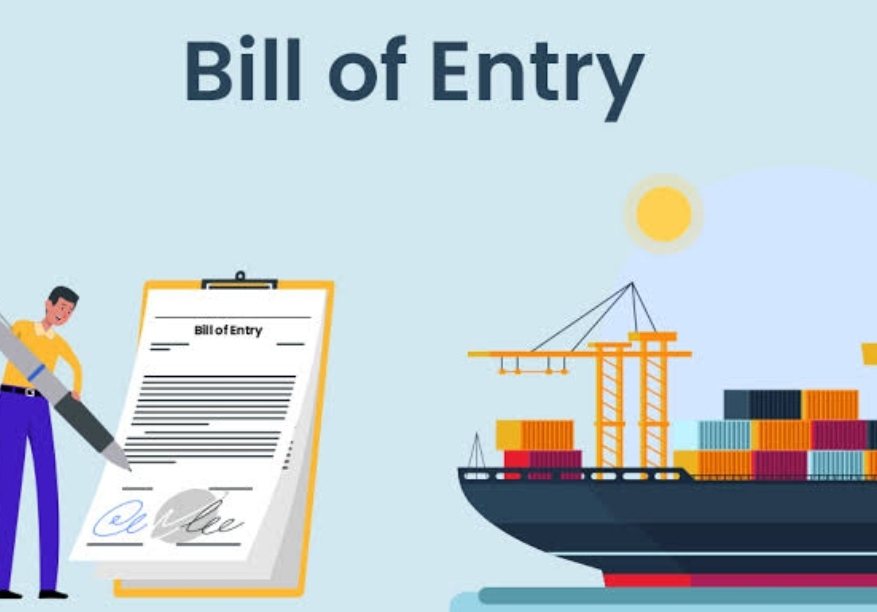
When goods are imported, a legal document is filed by the importer or a customs agent on their arrival. This legal document is called a bill of entry. The bill of entry forms an important part of the customs clearance procedure and is submitted to the customs department

Bill of Entry is a document filed by importers or customs clearing agents upon the arrival of imported goods. In this blog, learn about its need and usage.

What is bill of entry
A key step in the export procedure is documentation. Whether it is business registration or shipping and taxes, documents and licenses ensure smooth export of goods and seamless payments. Export documents usually depend on origin and destination countries and the products being exported, among other things.

All export goods must go through a specific set of procedures as stated by the Customs Office to ensure that authorities are charging the right taxes while checking consignments. This process includes examination, assessment and evaluation of the goods. To allow the authorities to correctly and accurately inspect imported products, every consignment is made available with a set of official documents that contain all the details about the consignment. The Bill of Entry is one such important document.

What is the bill of entry (BOE)?
Bill of Entry (BOE) is a legal document filed by importers or customs clearing agents upon the arrival of imported goods. It is submitted to the Customs Department of the origin country under the customs clearance process1.

The Bill of Entry is usually issued by two agencies:
• Agencies importing goods from foreign nations,
• Agencies selling commodities in a country after buying goods from SEZ or Special Economic Zone

What is the need for a Bill of Entry for exports?
A Bill of Entry provides the following benefits:
• Allows importers to furnish important details of the consignment to the customs authority
• Serves as an authentication document to inform authorities that no illegal commodities have been imported
• Assists customs authorities in cross-checking documents that have been submitted by the exporter during export or shipping
• Enables the customs office to charge appropriate taxes while avoiding malpractices
• Adds to the overall economic welfare of the nation

What are the types of Bill of Entry?
Depending on the purpose and nature of commodities that are imported, the customs office classifies a Bill of Entry into three categories2:
Bill of entry for house consumption:
This is meant for commodities that the importer will procure for self-consumption or specific business processes.
Bill of entry for warehousing:
Also known as Bond Bill of Entry, this type is issued when the importer is not willing to pay import duties at the time of import. In this case, the importer can store the goods in a dedicated warehouse until all dues are cleared at the Customs department.
Bill of entry for ex-bond goods:
When the importer has to release goods from the warehouse and overrule the BOE for Warehousing, a BOE for Ex-bond Goods is issued.

Contents in a bill of entry
Some of the major components in a Bill of Entry form are:
• Name and business address of importer, Customs House Agent
• IEC
• Monetary value and description of the goods
• Name and business address of the exporter
• Destination port
• Importer’s license number
• Rate payable and import duty’s value
• Port code (A Bill of Entry number contains 13 digits – the first of which are Port Codes)
What are the documents required for a bill of entry?
Depending on the type and nature of import, some documents required to obtain BOE are3:
• Shipping invoice
• Packing list
• Bank draft or letter of credit
• Bill of Lading
• Insurance documents
• CHA or importer’s declaration

How to fill a bill of entry?
Below are the steps for clearance of imported goods through a bill of entry:
Step 1:
It is important to confirm the mode of shipment to the CHA or importer. If the goods are shipped via air freight, the ACC Import Commissionerate will handle them. If they are shipped in courier mode, the New Courier Terminal ACC Export Commissionerate (NCT) will handle them.
Step 2:
BOE is usually filed by the customs broker or CHA electronically through EDI (Electronic Data Exchange) service centers via the ICEGATE portal. The BOE format is available on the website that is filed by CHA.
Step 3:
Once the Customs system processes it, CHA can access it and pay the import duties after registering the goods on the ICEGATE portal. The entire process of customs clearance is done electronically.
Step 4:
The customs examines all the details and issues Out of Charge (OOC).